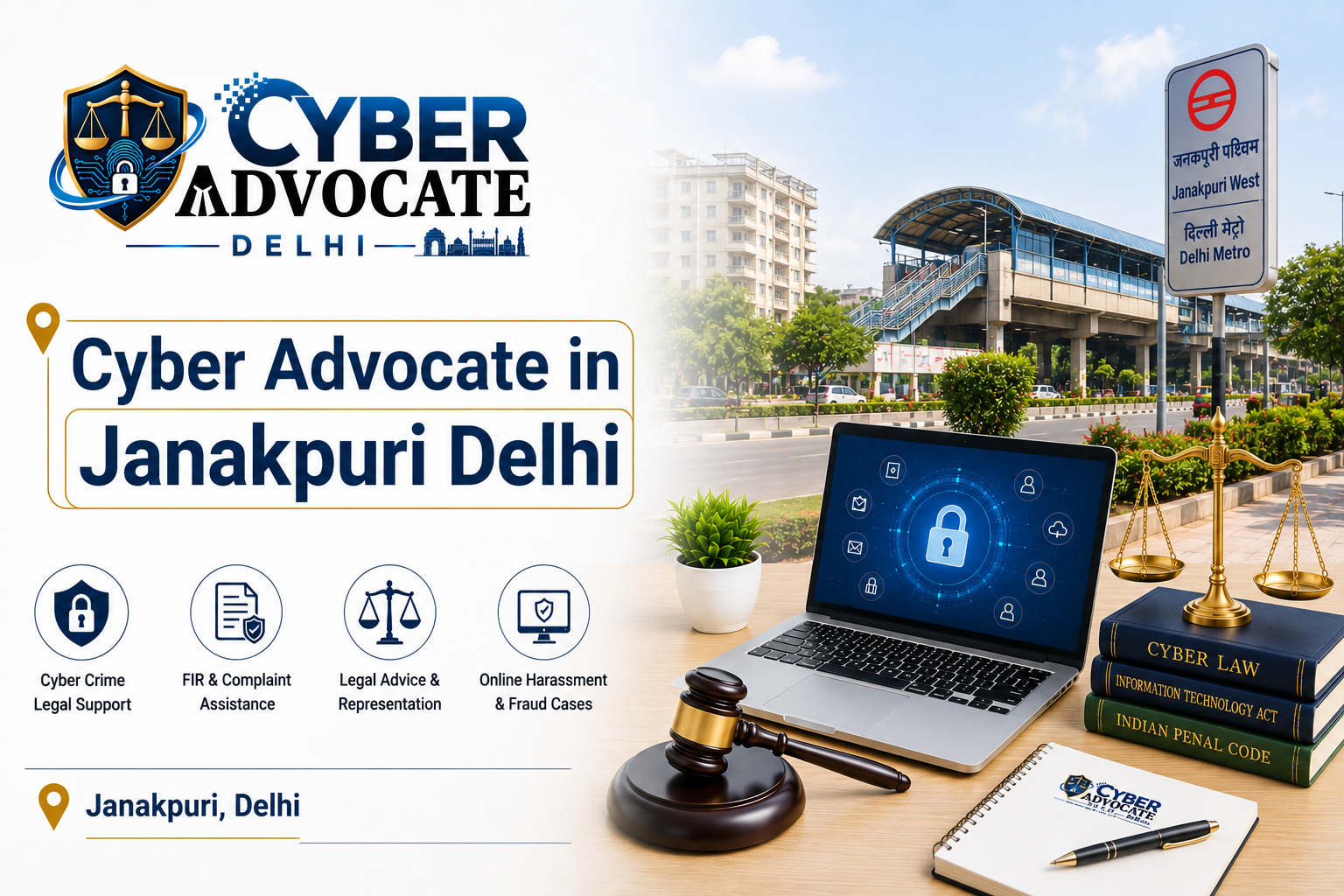
Cyber Advocate in Janakpuri Delhi – Online Fraud, Cyber Complaints & Digital Legal Matters
The growing use of digital banking, UPI, social media, smartphones and online communication has made technology an important part of everyday life. At the same time, the misuse of digital platforms can create complicated legal problems. A person may become a victim of an online financial scam, lose access to an account, face identity misuse or receive unwanted and threatening communication through the internet.
Cyber-related matters can involve both technical and legal aspects. The available messages, transaction records, account information, emails, screenshots and other electronic material may become important when understanding what actually happened.
A Cyber Advocate in Janakpuri Delhi deals with legal matters arising from cybercrime, online fraud, hacking, identity theft, digital harassment, electronic evidence and other technology-related disputes. The appropriate legal approach depends upon the circumstances of the incident and the stage at which the matter is being handled.
Cybercrime Matters Commonly Connected With Digital Activities
Cybercrime covers a wide range of situations rather than one particular type of offence. The incident may involve a bank account, mobile phone, computer, social-media profile, email address, payment application or another online service.
A Cyber Crime Lawyer in Janakpuri may deal with matters involving online scams, unauthorised transactions, account access, phishing, impersonation, cyber harassment and misuse of personal information.
Online Financial Fraud
Financial cybercrime can begin with a phone call, text message, WhatsApp conversation, email, social-media communication or fake website. The person behind the communication may present a false reason for requesting money or confidential information.
Some cases involve direct payment transfers, while others involve access to banking credentials or payment accounts.
A Cyber Fraud Lawyer in Delhi can examine the transaction history, communication and other available material to understand the circumstances of the alleged fraud.
UPI and Internet Banking Scams
UPI and internet banking have simplified everyday payments, but fraudulent payment requests can result in substantial financial loss.
Common situations can include fake payment links, fraudulent QR codes, impersonation of customer-care representatives and deceptive requests for verification.
What Information Should Be Kept?
Transaction IDs, bank statements, payment confirmations, SMS alerts, phone numbers, emails and related conversations can help establish the sequence of events. Keeping the complete transaction history can be more useful than retaining only a single screenshot.
Hacking and Unauthorised Access to Online Accounts
A compromised email or social-media account can expose private conversations, photographs, documents and contact information. In professional settings, an affected account can also be used to communicate with customers, employees or business contacts.
A Cyber Hacking Advocate in Delhi can examine allegations involving unauthorised access and review the digital information available regarding the account activity.
Recognising an Account Security Problem
An unfamiliar login notification, unexpected password-reset message, changed recovery information or messages sent without the owner’s knowledge may indicate unusual activity.
Protecting the Account
The affected account should be secured using the platform’s official recovery and security options. Relevant notifications and account activity should also be retained where possible.
Fake Profiles and Identity Misuse
Online impersonation can create problems when another person uses someone’s name, photograph or other identifying information to create a misleading digital identity.
A fake social-media profile may be used to contact friends, family members, customers or colleagues. In more serious situations, it may be connected with fraud, threats or reputational harm.
A Cyber Identity Theft Lawyer in Delhi can examine the circumstances surrounding the alleged misuse of personal identity.
Social Media Impersonation
When a fake profile is discovered, the profile URL, username, photographs, posts, comments and messages should be documented.
Why the Original Profile Information Matters
Online accounts can be renamed, modified or removed. Recording the available information can therefore help preserve the circumstances as they appeared when the issue was discovered.
Phishing and Deceptive Online Communication
Many cyber incidents begin with an apparently ordinary message. A person may receive communication claiming to be from a bank, courier company, employer, online marketplace or another organisation.
The objective may be to obtain confidential information, encourage a payment or direct the recipient to a fraudulent website.
A Phishing Scam Lawyer in Delhi can examine the communication, links, payment details and other records relevant to the incident.
Common Warning Signs
Suspicious communication may contain urgent requests for payment, unknown links, requests for OTPs or passwords, fake customer-care numbers or instructions to install unfamiliar applications.
Preserve the Original Communication
The original message or email can provide context about how the incident started. It should therefore be retained where possible instead of relying only on a rewritten description.
Cyber Harassment and Online Threats
Digital platforms can also be used for repeated unwanted communication, intimidation or threats. Such conduct may occur through social media, messaging applications, email or other online services.
The nature of the messages, their frequency and the relationship between the people involved may all be relevant.
A Cyber Harassment Lawyer in Delhi can examine the communication and explain the legal issues that may arise from the particular circumstances.
Maintaining a Record of Repeated Communication
Important information can include the date and time of messages, account names, phone numbers, profile URLs and screenshots.
Keep the Conversation Together
Preserving the surrounding conversation can provide greater context than keeping individual messages separately. It may also help establish how the communication developed over time.
Online Blackmail and Private Digital Material
Online blackmail may involve threats concerning private photographs, videos, conversations or other personal information. In some cases, the person making the threat may demand money or another benefit.
Such incidents can be particularly sensitive because the threatened material may involve personal privacy.
A Cyber Blackmail Advocate in Delhi can examine the communication, demands and electronic records connected with the matter.
Digital Records in Blackmail Cases
Relevant material may include messages, emails, voice notes, screenshots, account information, payment demands and profile URLs.
Avoid Unnecessary Deletion
Where communication may be relevant to the matter, it should be preserved carefully. Deleting the original conversation can make it more difficult to reconstruct the sequence of events.
Filing and Understanding a Cybercrime Complaint
A cyber complaint generally needs to explain what happened, when it happened and what information is available to support the allegations.
The nature of the complaint can vary significantly. A financial fraud matter may require transaction details, while a fake-profile complaint may depend upon account information and digital communication.
A Cyber Complaint Advocate in Delhi can explain the procedural considerations relevant to the particular situation.
Organising the Facts
Before reporting an incident, it can be useful to arrange:
-
- The date and time of the incident
-
- The platform or account involved
-
- Details of the communication
-
- Transaction information, where applicable
-
- Phone numbers or account details
-
- Screenshots and electronic records
-
- Details of any loss
-
- Steps already taken
A Chronological Account Can Help
Writing the events in sequence can make it easier to understand how the incident began, what communication followed and when the loss or other harm occurred.
Digital Evidence and Cybercrime Proceedings
Electronic evidence can be central to a cybercrime matter because much of the conduct takes place through digital platforms.
Bank records may show a financial transaction. Emails and messages can demonstrate communication. Account notifications may indicate login activity, while profile URLs can identify online accounts.
A Digital Evidence Lawyer in Delhi can explain the importance of electronic records in a complaint, investigation or legal proceeding.
Examples of Electronic Evidence
Depending upon the circumstances, relevant records may include:
-
- Emails
-
- Chat conversations
-
- Bank statements
-
- UPI transaction details
-
- Payment confirmations
-
- Screenshots
-
- Website addresses
-
- Social-media profiles
-
- Login notifications
-
- Photographs
-
- Videos
-
- Electronic documents
Context and Authenticity
A single screenshot may not explain the entire incident. Related messages, dates, account details and original electronic records can provide additional context.
Cyber Investigation and Legal Proceedings
After a cybercrime complaint, the matter may involve investigation depending upon the allegations and circumstances.
The nature of the investigation can differ from case to case. A financial fraud matter may focus on the transaction trail, while a hacking allegation may involve account activity and electronic information.
A Cyber Investigation Lawyer in Delhi can explain the procedural position according to the role of the person involved and the stage of the matter.
Different Positions in a Cyber Case
The person approaching a lawyer may be a victim, complainant, accused person or another party connected with the investigation.
Why Individual Assessment Matters
The legal position of each person can be different. Therefore, the facts, available evidence and procedural stage should be considered before deciding on the appropriate course.
Cybercrime Matters in West Delhi
Janakpuri is situated in West Delhi, and cyber-related complaints in the wider area can involve the relevant police and investigative structure for the district. Delhi Police records currently identify PS Cyber West at the Hari Nagar police-station premises and separately list PS Janak Puri at District Centre, Janakpuri.
This local connection can be relevant when understanding where a matter may be reported or which jurisdictional issues may arise. The exact procedure, however, depends upon the nature of the incident and the applicable legal process.
Local Cybercrime Legal Issues
A person in Janakpuri may approach a lawyer regarding online financial fraud, account hacking, digital impersonation, cyber harassment, data misuse or other technology-related disputes.
The important point is that the location alone does not determine the complete legal approach. The facts of the incident and the relevant jurisdiction need to be considered.
What to Do After Discovering a Digital Offence
The response after discovering a cyber incident can affect both account security and the availability of evidence.
Secure the Affected Account
Use the official recovery process and review recent account activity.
Preserve Important Information
Keep transaction records, messages, emails, screenshots, profile URLs and other relevant material.
Record the Events
Write down important dates, times, communications and transactions while the details are still clear.
Report Through the Appropriate Channel
The incident should be reported through the appropriate official mechanism depending upon its nature.
Obtain Case-Specific Legal Advice
Where there is significant financial loss, an allegation, investigation, notice or court proceeding, the facts should be reviewed carefully before deciding on further legal action.
Frequently Asked Questions
What does a Cyber Advocate in Janakpuri Delhi handle?
A Cyber Advocate in Janakpuri Delhi may handle matters involving online fraud, UPI scams, hacking, phishing, identity theft, fake profiles, cyber harassment, online blackmail, digital evidence and cybercrime proceedings.
What should I keep after an online fraud?
Keep transaction IDs, bank statements, payment confirmations, messages, emails, phone numbers, screenshots and other records connected with the incident.
What if someone creates a fake profile using my name?
Document the profile URL, username, photographs, posts and relevant communication. The appropriate legal and reporting procedure depends upon how the profile is being used and the circumstances involved.
Can emails and messages become relevant in a cyber case?
Electronic communication can become relevant when it is connected with the facts of the matter. The importance of a particular record depends upon the circumstances and applicable evidentiary requirements.
Can a cyber complaint lead to formal proceedings?
Depending upon the allegations, evidence and investigation, a cyber complaint can progress to further legal proceedings. The exact process varies from case to case.
Cybercrime can affect a person’s finances, privacy, identity, reputation and access to online accounts. The problem may begin with a simple message or payment request but can develop into a matter involving investigation, electronic evidence and legal proceedings.
Online fraud, UPI scams, hacking, phishing, identity theft, cyber harassment and digital blackmail are different types of problems and should not automatically be treated in the same way. The circumstances, available evidence and procedural stage are important in determining the appropriate legal approach.
A Cyber Advocate in Janakpuri Delhi can examine the facts of a technology-related dispute and explain the legal and procedural aspects relevant to the particular matter. Proper documentation and preservation of digital records can also be important when dealing with a cyber-related incident.
Legal Disclaimer
This content is provided only for educational and informational purposes. It is not an advertisement or solicitation and does not create an advocate-client relationship.